
Sale!
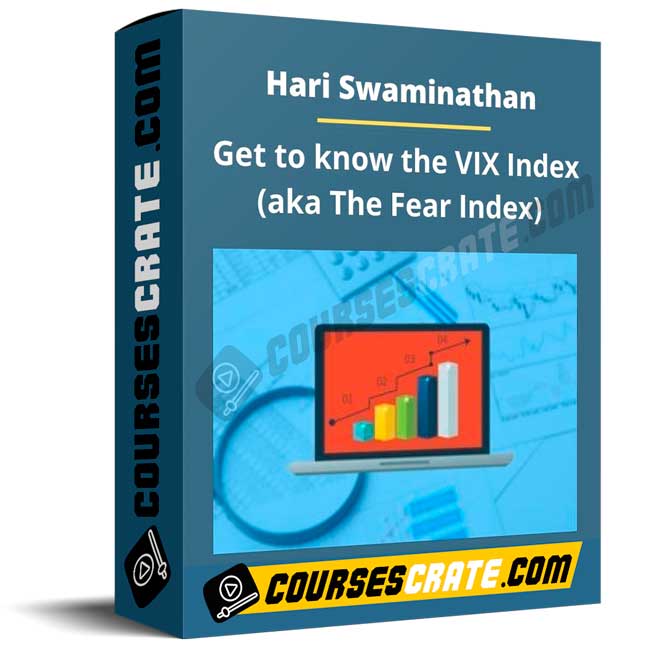
Hari Swaminathan – Get to know the VIX Index (aka The Fear Index)
Original price was: $247.00.$29.00Current price is: $29.00.
Learn the VIX Index (the Fear Index): what it measures, how it is calculated, and how VIX levels affect SPX and options pricing. Includes practical interpretation and high-VIX examples to help you choose smarter strategies by volatility regime.
courses fast [ coursesfast.com ], giga courses [ gigacourses.com ], udcourse [ udcourse.com ], beast courses [ beastcourses.com ],
imarketing courses [ imarketing.courses ], digital assistant academy [ digitalassistant.academy ]
Permanent Access Links
Instant Access to HD Quality Courses
24/7 Expert Support
100% Safe & Secure Checkout
Courses Are Updated Regularly
Hari Swaminathan – Get to know the VIX Index (aka The Fear Index) is a practical short course for traders who want to read market stress with more precision, instead of guessing from headlines.
You will learn what the VIX really represents, how it is computed, and how different VIX regimes can reshape S&P 500 option pricing and behavior.
If you trade indices, ETFs, or large-cap stocks with options, this framework helps you make cleaner decisions when volatility suddenly changes.
What is the Hari Swaminathan – Get to know the VIX Index (aka The Fear Index) course about?
The VIX is widely followed because it acts like a real-time barometer of market uncertainty. Although it is often called a volatility index, many traders treat it as a “fear index” because it tends to rise when markets sell off and fall when markets stabilize. This course focuses on what that label means in practical terms: what the index is built from, how to interpret its levels day to day, and why you should care if your trading involves options.
A key theme is understanding the relationship between the VIX and S&P 500 options. Since the VIX is derived from option prices, shifts in VIX are tightly connected to how options are priced, especially through implied volatility. The course also touches market behavior across different periods since the VIX was introduced in the 1990s, so you can see how correlations have behaved across regimes rather than relying on a single snapshot.
What will you learn and what will you achieve?
- Understand what the VIX Index measures and why it is closely watched by professionals and retail traders.
- Interpret what different VIX levels can signal in real market conditions, not just in theory.
- Learn the basics of how the VIX is calculated and why it reacts the way it does.
- Connect the VIX to SPX and S&P 500 options behavior, including how volatility feeds into option pricing.
- Understand what high VIX conditions can do to option prices, including a close look at the 2008 crisis environment.
- Identify which broad options approaches tend to fit low/medium VIX environments versus high VIX environments.
- Spot common risks and “watch-outs” when volatility spikes, so you can avoid poor assumptions during stress.
- Get exposure to related volatility indexes (for example, Nasdaq and Russell 2000 volatility measures) and why they matter.
Who is it for?
This course is designed for stock and options traders who want a clearer volatility lens. It is especially relevant if you trade major indices, ETFs, or large-cap names and want to understand how volatility regimes can change the behavior and pricing of options.
It also fits investors who do not trade frequently but still want to read market conditions more accurately, because the VIX is often used as a context indicator for risk-on versus risk-off periods.
How does it work?
The course is delivered online and is structured as a compact learning experience you can complete at your own pace. The listed duration is about 2 hours, which makes it suitable if you want focused learning without a long multi-week curriculum.
Course flow
You start with the basics of what the VIX is and why it matters, then move into history and calculation so your understanding is grounded. After that, the course shifts into practical interpretation and trading implications, including specific examples from a high-volatility environment and a concluding section on matching ideas to different VIX levels.
Benefits
When traders misunderstand the VIX, they often misread option prices, underestimate how quickly risk can expand, or apply the same strategy logic in every volatility regime. This course helps you build a more realistic volatility framework, so you can interpret market stress with less noise and more structure.
You will also gain a clearer sense of why certain products and approaches behave poorly when volatility is elevated, and why positioning and expectations should change when the VIX moves from “normal” to “extreme.”
Prerequisites
Basic stock market and trading knowledge is recommended, along with basic options knowledge. If you already understand calls, puts, and why implied volatility matters, you will be able to apply the concepts immediately.
About the author
Hari Swaminathan is an options mentor and financial markets educator, and the founder of OptionTiger. His background includes engineering studies at the College of Engineering, Pune (India), and MBA degrees from Columbia University and London Business School. His teaching focus centers on helping traders understand markets and options more systematically, blending theory with practical interpretation.
Why buy from our online course platform?
Centralize your digital purchases in a single account, keep your history, and access them whenever you want to watch online or download. Plus, you’ll always find courses on our platform at affordable prices.
Course curriculum
- Introduction to the VIX Index or Fear Index
- Course agenda and general discussion of the VIX Index
- History of the VIX Index
- Calculation of the VIX Index
- Practical analysis and implications of the VIX Index
- Relationship of the VIX Index to the S&P 500 options
- Practical trading examples during a high VIX environment
- Analysis of high VIX and Google (GOOG) options
- Analysis of the Nasdaq VIX (NVX) and the Russell 2000 VIX (RVX)
- Conclusion: ideal strategies for different VIX levels
- VIX quiz
- Bonus lecture
If you want a clearer volatility framework for options decisions, access the course now and start reading VIX levels with more confidence.
Downloadable Course Content
Be the first to review “Hari Swaminathan – Get to know the VIX Index (aka The Fear Index)”
You must be logged in to post a review.
Related products
Sale!
Forex & Trading
Original price was: $119.00.$16.00Current price is: $16.00.
Sale!
Forex & Trading
Original price was: $197.00.$22.00Current price is: $22.00.
Sale!
Forex & Trading
Original price was: $997.00.$43.00Current price is: $43.00.

Forex & Trading
$2.00
Sale!
Forex & Trading
Traders Reality – Scalp Trading Using The Hybrid System 2025
Original price was: $149.00.$19.00Current price is: $19.00.
Sale!
Forex & Trading
Original price was: $1,500.00.$7.00Current price is: $7.00.
Sale!
Forex & Trading
Original price was: $797.00.$74.00Current price is: $74.00.
Sale!

Forex & Trading
Original price was: $1,497.00.$16.00Current price is: $16.00.
Reviews
There are no reviews yet.