
Sale!
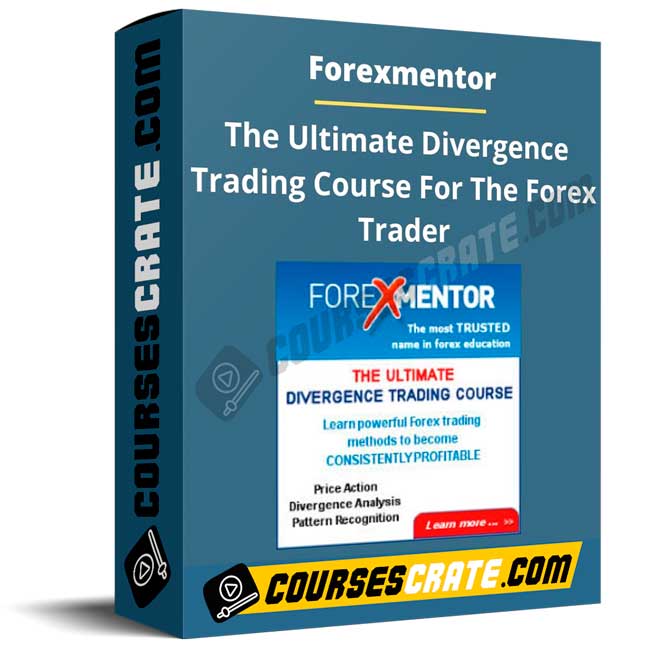
Forexmentor – The Ultimate Divergence Trading Course for the forex trader
Original price was: $249.00.$53.00Current price is: $53.00.
Forexmentor – The Ultimate Divergence Trading Course for the forex trader teaches a structured way to trade divergence with price action, patterns, and risk control, so you can filter setups and execute with a clearer plan.
courses fast [ coursesfast.com ], giga courses [ gigacourses.com ], udcourse [ udcourse.com ], beast courses [ beastcourses.com ],
imarketing courses [ imarketing.courses ], digital assistant academy [ digitalassistant.academy ]
Permanent Access Links
Instant Access to HD Quality Courses
24/7 Expert Support
100% Safe & Secure Checkout
Courses Are Updated Regularly

Forexmentor – The Ultimate Divergence Trading Course for the forex trader is built for traders who want to read the market with more clarity, using divergence as a repeatable decision tool instead of a guess.
It blends divergence analysis with price action, support and resistance, and pattern recognition, so you can move from “I think it will turn” to “I have a structured reason to act, and a plan if I’m wrong”.
If you want a framework you can apply across different chart timeframes and sessions, this course focuses on process: how to spot quality setups, how to manage risk, and how to stay consistent in execution.
What is the Forexmentor – The Ultimate Divergence Trading Course for the forex trader course about?
This course presents a divergence-focused trading methodology designed for retail Forex traders, combining divergence analysis with price patterns and price action tools you can access on common trading platforms.
Instead of relying on proprietary indicators, the approach emphasizes using widely available tools and learning the “why” behind each trading decision. That matters because divergence can be powerful, but only when it is filtered, placed in context, and managed with discipline.
Beyond divergence itself, the course expands into the full trading foundation: risk and trade management, journaling, market analysis, technical tools, and the way fundamentals and inter-market relationships can shape currency behavior. The goal is not to “collect tactics”, but to build a complete workflow you can run before, during, and after every trade.
What you will achieve
- Recognize and differentiate regular divergence, hidden divergence, and slope divergence in real charts.
- Set up your charts for divergence trading and build a simple routine to prepare for the trading day.
- Use support and resistance to define trading zones and improve the context around divergence signals.
- Combine divergence with price patterns to evaluate whether the market is likely correcting or reversing.
- Plan entries, stop placement, and targets with a risk-first mindset, including reward-to-risk thinking.
- Apply trade management principles: when to hold, when to reduce risk, and how to respond after being stopped out.
- Strengthen your decision-making through journaling, consistency habits, and practical risk management basics.
- Build a broader market lens with introductory foundations in technical, fundamental, and sentiment analysis.
Who is it for?
This course is designed for Forex traders who want a structured way to use divergence, whether you prefer objective rules or a more discretionary style based on market context.
It can fit different timeframes and trading rhythms because the methodology focuses on reading price behavior rather than chasing one fragile setup. It is especially relevant if you are tired of “indicator hopping” and want to build confidence through a repeatable workflow.
It is not ideal for anyone looking for quick signals, shortcut promises, or a one-click system. Divergence becomes valuable when you practice observation, filtering, and disciplined execution.
How does it work?
The course is delivered as a video program, with access offered in an online version and a DVD ROM version according to the course provider. The online version is positioned for immediate access, while the DVD ROM option is described for viewing on Windows PCs or notebooks.
From a learning-flow perspective, the curriculum moves from core concepts and trader foundations into analysis tools and then into step-by-step application. That sequencing helps you avoid the common trap of learning “entries” before you understand context, risk, and trade management.
Benefits
Clearer signal context: Learn to treat divergence as information that must be confirmed, not as an automatic trade trigger.
Better structure under pressure: A defined process for preparation, execution, and review can reduce impulsive decisions and overtrading.
Risk-first execution: Risk management, reward-to-risk thinking, and trade management principles are integrated as core skills rather than afterthoughts.
Broader market understanding: The course content expands into fundamentals and inter-market perspectives, helping you see why currencies can move beyond a single chart pattern.
Prerequisites
You will need access to a charting/trading platform where you can apply common tools used in divergence trading. Since the course references indicators such as MACD, RSI, and stochastics, it helps to be comfortable adding indicators and reading basic price charts.
No advanced math or coding is required, but you should be ready to practice, take notes, and review examples to build pattern recognition over time.
About the author
The course is presented by Chris Mathis through Forexmentor. The provider describes the program as a culmination of his trading knowledge, including experience in trading funds and coaching students, and positions the methodology as a complete divergence and pattern-based approach for retail Forex traders.
Why buy from our online course platform?
Centralize your digital purchases in a single account, keep your history, and access them whenever you want to watch online or download. Plus, you’ll always find courses on our platform at affordable prices.
Course curriculum
- Section 1 – Introduction: Course orientation, trader context, and a practical overview of what you will learn.
- Section 2 – Divergence explained: Why divergence matters, how it fits different timeframes and trading styles, and how to use it as a dynamic approach.
- Section 3 – Laying the foundation: Realistic expectations, probability thinking, avoiding common behavioral errors (such as overtrading), and building a personal trading plan.
- Section 4 – Trading principles: Risk management, reward-to-risk logic, trade management, consistency, journaling, and having proper tools.
- Section 5 – Trade analysis basics: Technical, fundamental, and sentiment angles, plus reward-to-risk analysis.
- Section 6 – Basic fundamentals: Macro/micro concepts, interest rates, inflation/deflation, and related fundamentals terminology.
- Section 7 – Inter-market analysis: How commodities, equities, bond spreads, and reports like COT can provide context around currency movement.
- Section 8 – Technical toolbox: Price action, support/resistance, trend lines, regression channels, and indicator tools (including MACD, stochastics, RSI) plus Fibonacci methods.
- Section 9 – Price patterns: Pattern families (such as ABC structures, triangles, wedges, and related concepts), including why patterns fail and how trend degrees matter.
- Section 10 – Trading divergence step-by-step: Applying divergence in real decision flow, chart setup, building zones, spotting setups, entering, placing stops, setting targets, and managing outcomes.
If you want a structured divergence workflow you can practice and review, you can access the course now and start building a more consistent trading process.
Downloadable Course Content
Be the first to review “Forexmentor – The Ultimate Divergence Trading Course for the forex trader”
You must be logged in to post a review.
Related products
Sale!
Forex & Trading
Original price was: $795.00.$40.00Current price is: $40.00.
Sale!

Forex & Trading
Original price was: $1,900.00.$17.00Current price is: $17.00.
Sale!

Forex & Trading
Original price was: $299.00.$15.00Current price is: $15.00.
Sale!
Forex & Trading
Original price was: $199.00.$21.00Current price is: $21.00.
Sale!
Forex & Trading
Original price was: $119.00.$16.00Current price is: $16.00.
Sale!

Forex & Trading
Original price was: $997.00.$11.00Current price is: $11.00.
Sale!
Forex & Trading
Original price was: $795.00.$86.00Current price is: $86.00.
Sale!

Forex & Trading
Original price was: $197.00.$9.00Current price is: $9.00.

Reviews
There are no reviews yet.