
Sale!
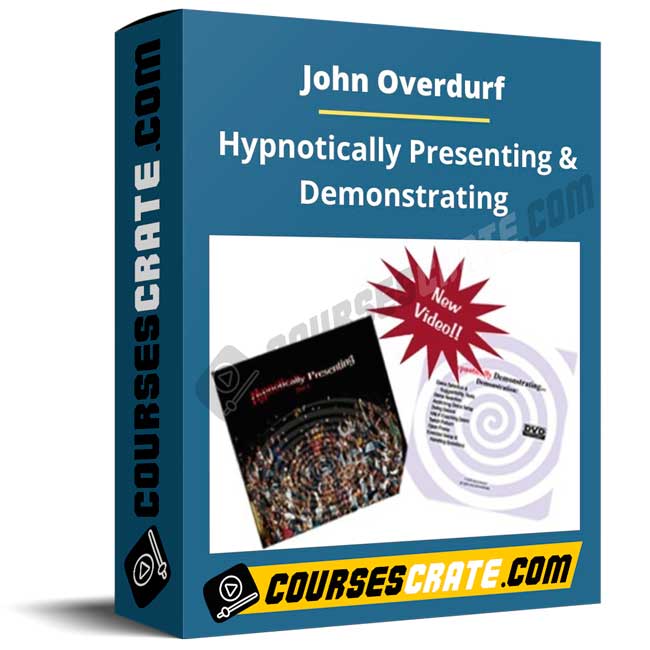
John Overdurf – Hypnotically Presenting & Demonstrating
Original price was: $792.00.$22.00Current price is: $22.00.
John Overdurf – Hypnotically Presenting & Demonstrating trains trainer state, voice pacing, metaphor, and reliable live demos. Built from a 16-hour presenting training and an 8-hour demonstration module with Q&A strategies.
courses fast [ coursesfast.com ], giga courses [ gigacourses.com ], udcourse [ udcourse.com ], beast courses [ beastcourses.com ],
imarketing courses [ imarketing.courses ], digital assistant academy [ digitalassistant.academy ]
Permanent Access Links
Instant Access to HD Quality Courses
24/7 Expert Support
100% Safe & Secure Checkout
Courses Are Updated Regularly

John Overdurf – Hypnotically Presenting & Demonstrating is a practical training for anyone who needs to communicate in front of a group and make learning “land” in real time. It focuses on what separates an average presentation from a truly influential one: state, timing, voice, framing, and the ability to guide attention without sounding artificial.
This is not about memorizing scripts. It is about learning how to present yourself so your audience naturally follows your sequencing, stays engaged, and leaves with the key themes still running in their mind. If you teach, coach, facilitate, sell, or lead trainings, this course is built to help you become more consistent and more confident under real-world pressure.
The material also covers how to demonstrate patterns in front of a group. You learn how to set up demos so they are more reliable, how to select the right demo subject, and how to handle questions without losing momentum. The outcome is a stronger skill set for live training environments where attention is the real currency.
What is the John Overdurf – Hypnotically Presenting & Demonstrating course about?
John Overdurf – Hypnotically Presenting & Demonstrating is built around the idea that effective presenting is a hypnotic process: not in a theatrical sense, but in the practical sense of shaping attention, pacing experience, and creating learning states in a room. The main emphasis is how to present yourself using brain-based training principles, NLP and hypnosis-informed communication, and trainer-level handling of group dynamics.
It teaches you how to influence an audience from the very first moments, including how to use orientation, pre-framing, and subtle patterning before the “main content” even begins. Instead of relying on podium-and-slides delivery, you learn an approach that uses your voice, your body, and the process of the group to create engagement and retention.
The demonstrating component adds the missing piece for many trainers: how to run live demos that are both effective and ethical, even when the audience is watching closely. You will learn the practical mechanics of setting up a demo, choosing what to demonstrate, and keeping the learning intact while the demo is happening.
What will you learn?
- How to maintain an ideal trainer state so you stay connected, energetic, and responsive throughout a full training.
- How to start influencing your audience before the formal content begins, using orientation and pre-framing.
- How to use voice tempo variation to create and anchor learning states, attention, and memory.
- How to increase flexibility in your delivery by understanding predictable audience reactions and how to work with them.
- How to organize content using chunking, sequencing, and structure so your message stays clear and compelling.
- How to apply pacing and leading in a way that produces participation and learning without sounding staged.
- How to “install” themes so they keep running after the training ends, using stacked themes and strategic repetition.
- How to sequence states for learning and resilience using chaining anchors and story-based installation.
- How to teach step-based processes hypnotically so the steps stick without feeling forced.
- How to use metaphor and nested loops to embed learning, values, and strategies with more impact.
- How to set up and run live demos using hypnotic principles, including demo selection and common pitfall avoidance.
- How to handle audience questions as a learning gateway, keeping your momentum and strengthening the training outcome.
Who is it for?
This course is best for people who present, train, or demonstrate techniques in front of others and want a stronger, more repeatable system.
- Trainers and facilitators who want to keep groups engaged without relying on rigid scripts or slide-heavy delivery.
- Coaches and practitioners who run workshops and want better pacing, framing, and audience state management.
- NLP and hypnosis-oriented communicators who want to apply principles in a modern, natural, up-time style.
- Leaders and educators who want to communicate with more clarity, influence, and retention across diverse audiences.
If your biggest challenge is “I know the content, but the room doesn’t always follow,” the methods in this training are designed to close that gap.
How does it work?
John Overdurf – Hypnotically Presenting & Demonstrating is delivered as digital training. The presenting portion is provided as an audio and video download with referenced handouts, and it is described as 16 hours recorded in 2012. The demonstrating portion is delivered as a video download described as 8 hours, also recorded in 2012.
A key advantage is that the recordings keep the feel of a real training environment rather than polishing away every unexpected moment. That matters because confidence is built by seeing how a skilled trainer handles real-time dynamics: timing, transitions, audience responses, and course corrections.
Most learners get the best results by using a practice loop: watch one segment, identify one “presenter move” to install, rehearse it in a real context, then return to the next segment with better calibration. This turns the material into a skill, not just information.
Benefits
- More audience retention: clearer sequencing, stronger framing, and better timing across the whole session.
- More confidence under pressure: trainer state skills that make you steadier when the room is unpredictable.
- Better vocal impact: practical voice tempo tools to guide attention, emphasize key points, and anchor learning.
- Cleaner demos: more reliable demo setup, subject selection, and execution in front of a live audience.
- Stronger theme installation: techniques that help your audience leave with the message still active in their thinking.
Benefits depend on practice and professional scope. This is skills training, not a guarantee of outcomes in any specific audience or client situation.
Prerequisites
No formal prerequisites are required. It helps if you have some experience presenting, teaching, coaching, or facilitating groups, because you will recognize the real-world moments the course is designed to improve. If you demonstrate change-work methods in public settings, use professional judgment, consent-based processes, and ethical pacing appropriate to your context.
About the author
John Overdurf is an experienced teacher, presenter, and trainer whose work blends practical hypnosis principles, NLP-informed communication, and advanced training design. He describes teaching, presenting, and training across multiple settings since 1980, and he describes demonstrating in front of groups since 1983.
His style is known for multi-level teaching: content, process, and trainer consciousness working together. This course reflects that approach by showing not only what to do, but how to be and how to notice what matters in the room.
Why buy from our online course platform?
Centralize your digital purchases in a single account, keep your history, and access them whenever you want to watch online or download. Plus, you’ll always find courses on our platform at affordable prices.
Course content
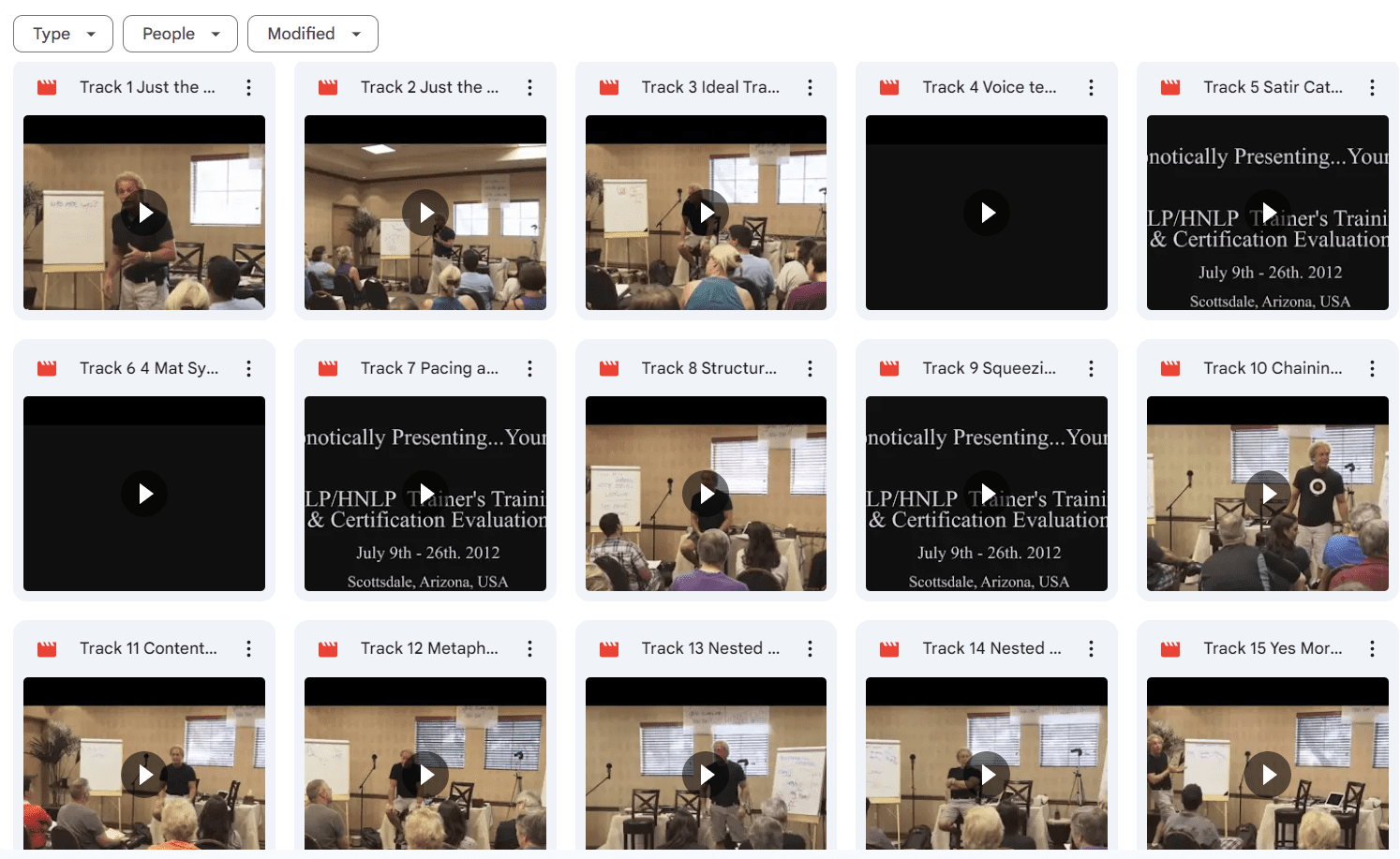
- Hypnotically Presenting (presenter skill building)
- When the orientation is not just the orientation
- The ideal trainer state
- Voice tempo variation for anchoring learning states
- Satir categories for increasing presenting flexibility
- 4-Mat, chunking, sequencing, and engagement design
- Pacing and leading for participation and learning
- Structure of a secret and attention management
- Stacking themes and installing long-running ideas
- Chaining anchors and sequencing states for learning
- Content chains for teaching step-based processes
- Metaphor for memory and meaning
- Nested loops and multi-embedded learning structures
- Hypnotically Demonstrating (live demos and trainer handling)
- How to use hypnotic principles to set up a powerful demo
- Demo selection and avoiding common trainer pitfalls
- An anchoring demo approach designed to be convincing and educational
- How to set up and run NLP-style demonstrations in front of an audience
- A coaching demo format for faster, conversational setup
- Swish pattern demo refinements for stronger impact
- How to handle questions while keeping learning and momentum
- Exercise setup and debrief questions that deepen learning
Access the course now if you want a repeatable way to lead rooms, run clean demos, and present with more influence and clarity.
Downloadable Course Content


Be the first to review “John Overdurf – Hypnotically Presenting & Demonstrating”
You must be logged in to post a review.
Related products
Sale!

NLP & Hypnosis
Original price was: $997.00.$77.00Current price is: $77.00.
Sale!
NLP & Hypnosis
Original price was: $297.00.$27.00Current price is: $27.00.
Sale!
NLP & Hypnosis
Original price was: $89.00.$11.00Current price is: $11.00.
Sale!
NLP & Hypnosis
Original price was: $35.00.$19.00Current price is: $19.00.
Sale!

Original price was: $197.00.$19.00Current price is: $19.00.
Sale!
Original price was: $399.00.$30.00Current price is: $30.00.
Sale!

NLP & Hypnosis
Original price was: $88.00.$4.00Current price is: $4.00.
Sale!

NLP & Hypnosis
Original price was: $1,300.00.$10.00Current price is: $10.00.
Reviews
There are no reviews yet.