
Sale!
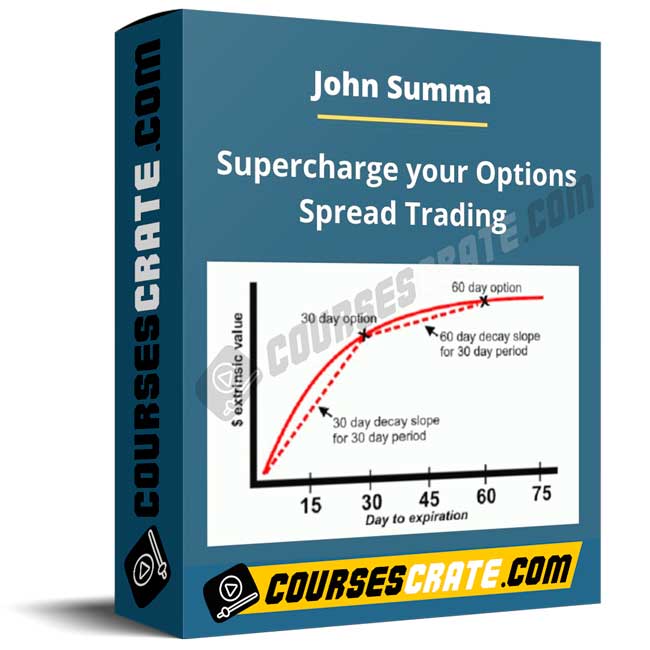
John Summa – Supercharge your Options Spread Trading
Original price was: $297.00.$30.00Current price is: $30.00.
John Summa – Supercharge your Options Spread Trading teaches how to build balanced and unbalanced diagonal spreads for equity and equity futures options, with clearer risk planning and smarter time-and-volatility awareness.
courses fast [ coursesfast.com ], giga courses [ gigacourses.com ], udcourse [ udcourse.com ], beast courses [ beastcourses.com ],
imarketing courses [ imarketing.courses ], digital assistant academy [ digitalassistant.academy ]
Permanent Access Links
Instant Access to HD Quality Courses
24/7 Expert Support
100% Safe & Secure Checkout
Courses Are Updated Regularly

John Summa – Supercharge your Options Spread Trading is a focused options training built around one objective: help you deploy customized diagonal spreads with a clearer plan, cleaner risk structure, and more control over time decay and volatility exposure.
If you already understand basic calls and puts but feel stuck between “too risky” directional bets and “too slow” conservative income plays, diagonal spreads can sit in the middle with more flexibility.
This course centers on creating balanced and unbalanced diagonal spreads and applying them in both equity options and equity futures options markets.
Trading involves risk. The value of this training is not prediction. It is a repeatable framework for building spreads with defined risk logic and intentional trade management.
What is the John Summa – Supercharge your Options Spread Trading course about?
This course is positioned around customized diagonal options spreads, with a specific emphasis on building both balanced and unbalanced structures. A diagonal spread combines two options of the same type (calls or puts) using different strikes and different expirations, blending features of vertical spreads and calendar spreads.
In real trading, a diagonal spread is practical because it can express a directional view while also working with time decay and changes in implied volatility. Rather than relying on one single edge, you structure the trade so multiple factors can influence outcomes: underlying movement, theta decay on the short option, and vega sensitivity on the long-dated option.
The “balanced versus unbalanced” framing is important for decision-making. A more balanced structure typically aims to keep directional exposure more controlled, while an unbalanced structure can lean more bullish or bearish depending on strike selection, expirations, and how you shape the delta profile. The point is not to make it complicated, but to give you control: you choose the type of diagonal that matches your thesis and your risk tolerance.
The training is described as applicable to equity options as well as equity futures options markets. That matters because product behavior, liquidity, and volatility regimes can differ. The same spread idea can be adapted, but your planning needs to respect the instrument you trade.
What will you learn and achieve?
- Build diagonal spreads with clear intent, including balanced and unbalanced structures, instead of placing random strike and expiration combinations.
- Choose expirations and strikes in a way that aligns your time horizon with the trade thesis and your risk limits.
- Understand how theta and vega interact inside diagonal spreads, so you can avoid trades that look good only on paper.
- Plan defined-risk entries by mapping maximum risk, realistic profit zones, and conditions that invalidate the setup.
- Apply diagonal spreads to equity options and equity futures options contexts with a more disciplined selection process.
- Improve trade management decisions by focusing on what changes the spread’s behavior: time passing, volatility shifts, and underlying movement.
- Reduce “hope-based holding” by defining adjustment and exit triggers before you enter, including what you will do as the short leg approaches expiration.
- Build a repeatable workflow for screening candidates, selecting a diagonal structure, and documenting decisions for continuous improvement.
Who is it for?
This course is best suited for traders who already know the basics of options and want to level up into structured spread trading. If you understand calls and puts, have placed a few trades, and want more control than simple long options, diagonal spreads can be a logical next step.
It can also fit traders who already use vertical spreads or calendar spreads, but want a structure that can blend both ideas and create more flexibility in how risk and exposure are shaped.
If you are brand new to options, you may find the learning curve steep. You will get more value if you are already comfortable with terms like strike, expiration, intrinsic versus extrinsic value, and the practical meaning of the Greeks.
How does it work?
The most effective way to use a diagonal-spread focused training is to study one structure at a time and practice it until the logic becomes automatic. Start by learning the “why” behind balanced and unbalanced diagonals, then apply the same decision rules repeatedly on a small set of liquid underlyings.
Use a simple execution rhythm. First, define context and thesis. Second, choose the diagonal structure that matches that thesis. Third, map risk and key scenarios before entry. Finally, manage the position as a living spread, not as two isolated options.
Diagonal spreads reward patience and planning. When you treat them as a process, you reduce the urge to chase price, and you become more consistent in how you size risk, select expirations, and respond to volatility changes.
Benefits
Diagonal spreads can offer a more nuanced way to trade compared to single-leg options. Instead of paying full premium for a long option and fighting time decay, you can offset part of that decay by selling a nearer-term option.
You also gain more control over volatility exposure. Many traders underestimate how much implied volatility can move pricing. A diagonal spread can be structured so you are not relying on only one factor to be right.
Another benefit is flexibility. With balanced and unbalanced diagonals, you can tune how directional you want to be. That makes it easier to align a trade with your confidence level, your timeline, and your defined loss limit.
If your goal is to trade spreads with more intention and less guessing, access the course now and use it to build a diagonal-spread workflow you can repeat across different markets.
Prerequisites
You should understand basic options mechanics, including how expiration and strike selection affect pricing. Familiarity with theta and vega is strongly recommended, because diagonal spreads are naturally sensitive to time decay and implied volatility.
You also need an options-enabled brokerage account that supports spread trading, and you should be comfortable defining a maximum risk per trade. This is educational content and does not remove market risk.
About the author
John Summa is publicly described as an economist and author and is known for options education work, including founding an options-focused education site. His background is associated with training stock, options, and futures traders, which aligns with the course’s focus on diagonal spreads across equity and equity futures options markets.
Why buy from our online course platform?
Centralize your digital purchases in a single account, keep your history, and access them whenever you want to watch online or download. Plus, you’ll always find courses on our platform at affordable prices.
Keep your library organized, revisit the material when market conditions change, and build a consistent study routine without losing track of what you have already implemented.
Access the course now and start building diagonal spreads with a clearer plan and tighter risk structure.
Downloadable Course Content
Be the first to review “John Summa – Supercharge your Options Spread Trading”
You must be logged in to post a review.
Related products

Forex & Trading
$2.00
Sale!

Forex & Trading
Original price was: $1,249.00.$123.00Current price is: $123.00.
Sale!

Forex & Trading
Original price was: $2,997.00.$32.00Current price is: $32.00.
Sale!

Forex & Trading
Original price was: $997.00.$11.00Current price is: $11.00.
Sale!
Forex & Trading
Original price was: $795.00.$40.00Current price is: $40.00.
Sale!

Forex & Trading
Original price was: $197.00.$9.00Current price is: $9.00.
Sale!

Forex & Trading
Traders Reality – Scalp Trading Using The Hybrid System 2025
Original price was: $149.00.$19.00Current price is: $19.00.
Sale!

Forex & Trading
Original price was: $97.00.$11.00Current price is: $11.00.
Reviews
There are no reviews yet.