
Sale!
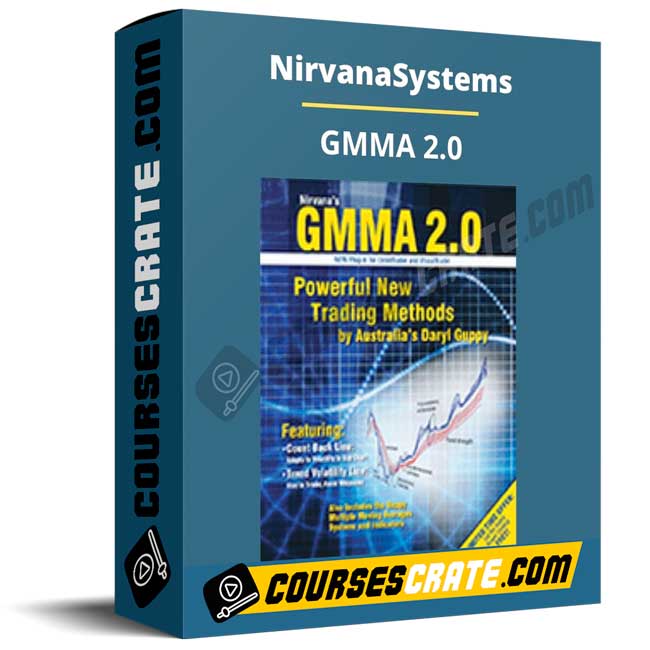
Nirvanasystems – GMMA 2.0
Original price was: $395.00.$72.00Current price is: $72.00.
Nirvanasystems – GMMA 2.0 is a trading plug-in for OmniTrader/VisualTrader built with Daryl Guppy’s GMMA, plus Count Back Line and Trend Volatility Line tools to improve trend analysis, entries, and stop management.
courses fast [ coursesfast.com ], giga courses [ gigacourses.com ], udcourse [ udcourse.com ], beast courses [ beastcourses.com ],
imarketing courses [ imarketing.courses ], digital assistant academy [ digitalassistant.academy ]
Permanent Access Links
Instant Access to HD Quality Courses
24/7 Expert Support
100% Safe & Secure Checkout
Courses Are Updated Regularly

Nirvanasystems – GMMA 2.0 is a trading plug-in designed for OmniTrader and VisualTrader users who want a clearer way to read trend strength, trend stability, and practical trade management. It is built around Daryl Guppy’s Guppy Multiple Moving Average (GMMA) approach and extends it with specific tools that support entries, maximum risk planning, and stop management.
The core promise here is not “easy profits.” It is structure. GMMA 2.0 aims to help you see what the market is doing through a composite view of multiple moving averages, then apply repeatable tools to manage trades with less emotional noise.
This is educational trading software. Trading involves risk, and no indicator, system, or strategy can guarantee results. Use responsible position sizing and only risk capital you can afford to lose.
What is the Nirvanasystems – GMMA 2.0 plug-in about?
Nirvanasystems – GMMA 2.0 is a GMMA-based toolset created for platform-based analysis and rule-driven workflows. The GMMA concept uses a set of 12 moving averages to create a “group behavior” view of the market. Instead of focusing on a single line, you study how fast and slow groups expand and contract, which can suggest whether a trend is strengthening, weakening, or stabilizing.
GMMA 2.0 is presented as an upgrade to the earlier GMMA plug-in, and it highlights two key additions linked to Guppy’s later techniques: the Count Back Line (CBL) and the Trend Volatility Line (TVL). The CBL concept is described as a volatility-adaptive method that supports trade entry triggers, maximum risk definition, and profit-protection conditions. The TVL concept is positioned as a step-wise trailing stop approach derived from the slower moving average group, designed to manage trades with trend volatility in mind.
In addition to these concepts, GMMA 2.0 is packaged as a complete plug-in style product, meaning it can include indicators, systems, stops, and strategies that help you apply the approach inside your trading platform rather than only reading it visually.
What will you learn?
- How the GMMA framework uses multiple moving averages to show trend stage and trend stability.
- How to interpret expansion and contraction in moving-average groups as a practical “trend behavior” signal.
- How the Count Back Line (CBL) concept can be used to define entries and structure maximum risk planning.
- How the Trend Volatility Line (TVL) approach is used as a trade management method for trailing exits.
- How to bring visual confirmation concepts into a more rules-based process inside OmniTrader or VisualTrader.
- How to use included indicators and oscillators to support trend confirmation and pullback timing.
- How systems, stops, and strategies work together as a workflow, not as isolated tools.
- How to standardize your routine: identify trend context, evaluate entry conditions, define invalidation, then manage exits systematically.
Who is it for?
Nirvanasystems – GMMA 2.0 is designed for traders who want a structured, platform-integrated approach to trend analysis and trade management. It can be a strong fit for:
- OmniTrader or VisualTrader users who want GMMA-based tools integrated into their daily workflow.
- Trend-focused traders who prefer confirmation and stability cues, not only fast signals.
- Traders who want practical stop management methods that adapt to market behavior.
- Process-oriented traders who prefer tools that support journaling, repeatable decisions, and post-trade review.
If your style is purely discretionary and you do not want to follow structured rules, you may not use the plug-in to its full potential. The biggest value comes from applying consistent logic over time.
How does it work?
Nirvanasystems – GMMA 2.0 installs as a plug-in for OmniTrader and/or VisualTrader and provides a packaged set of tools you can apply directly on charts and in platform workflows. The practical usage is simple: you use GMMA-based indicators to establish trend context, then apply CBL and TVL concepts for entries and trade management decisions, supported by additional systems and stops included in the package.
A practical implementation flow inside your routine often looks like this:
- Context: use GMMA visuals and supporting indicators to judge trend direction and stability.
- Setup: look for pullbacks or conditions aligned with the trend context rather than forcing trades in noisy zones.
- Entry structure: use CBL-based logic to frame entry triggers and define where the idea is invalid.
- Management: apply TVL-style trailing logic and other included stops to reduce emotional exit decisions.
- Review: document outcomes and whether you followed the tool-based process, not just whether a trade won or lost.
This approach is especially useful when you want consistency, because the same toolset can be applied across symbols and timeframes as part of a standardized workflow.
Benefits
- Clearer trend reading: GMMA emphasizes trend stability and stage through group behavior, not single-line noise.
- More structured entries and exits: CBL and TVL concepts support rule-based trade planning and management.
- Better operational consistency: packaged indicators, systems, and stops help you repeat the same process across markets.
- Improved decision discipline: when risk and management are planned, you reduce impulsive reactions during volatility.
Prerequisites
To use Nirvanasystems – GMMA 2.0 effectively, you should have access to OmniTrader and/or VisualTrader and be comfortable working with chart studies, systems, and basic trading terminology. GMMA is concept-driven, so you will benefit from a willingness to practice reading trend structure and applying management rules with patience.
If you are new to systematic decision-making, consider practicing on historical charts or in a low-risk environment while you develop consistency.
About the author
Nirvanasystems – GMMA 2.0 is presented as a collaboration between Nirvana Systems and Daryl Guppy, known for the Guppy Multiple Moving Average methodology. The plug-in builds on the GMMA foundation and incorporates additional techniques associated with Guppy’s Count Back Line and Trend Volatility Line concepts.
From a buyer’s standpoint, the key takeaway is practical: this is not a generic moving-average indicator. It is a packaged GMMA toolkit intended to make trend analysis and trade management more structured inside your platform.
Why buy from our online course platform?
Centralize your digital purchases in a single account, keep your history, and access them whenever you want to watch online or download. Plus, you’ll always find courses on our platform at affordable prices.
You also keep your trading education library organized, so you can revisit key GMMA concepts and tool behavior when you are reviewing trades, refining stops, or rebuilding a consistent routine.
Course content
Indicators
- GMMA Indicator: plots the 12 exponential moving averages used in the GMMA method.
- GMMA Oscillator: plots the difference between the sums of the two moving average groups with a signal line concept.
- GAMS Oscillator: standard-score treatment of the GMMA oscillator with scale lines for multiple standard deviations.
- GMMAD Indicator: plots the summed differences of a group of EMAs to reflect trend strength changes.
- GA Separation: separation measurement across selected EMAs to help identify trends and potential reversals.
- Guppy CBL Indicator: plots price levels based on the Count Back Line concept.
Systems & Stops
- GAMS System
- GMMAB System
- Guppy CBL System
- Guppy Fixed CBL Loss Stop
- Guppy Trailing CBL Stop
- Guppy TVL Stop
Strategies
- GMMA Optimized
- GMMA Reversal
- Guppy CBL Classic
- Guppy Power Strategy
Access the course now if you want a GMMA-based toolkit that helps you read trend stability and manage trades with clearer, more repeatable rules inside OmniTrader or VisualTrader.
Downloadable Course Content
Be the first to review “Nirvanasystems – GMMA 2.0”
You must be logged in to post a review.
Related products
Sale!
Forex & Trading
Original price was: $119.00.$16.00Current price is: $16.00.
Sale!

Forex & Trading
Original price was: $1,497.00.$16.00Current price is: $16.00.
Sale!

Forex & Trading
Original price was: $1,497.00.$44.00Current price is: $44.00.
Sale!

Forex & Trading
Original price was: $1,249.00.$123.00Current price is: $123.00.
Sale!

Forex & Trading
Original price was: $997.00.$11.00Current price is: $11.00.
Sale!

Forex & Trading
Original price was: $299.00.$15.00Current price is: $15.00.
Sale!
Forex & Trading
Original price was: $797.00.$74.00Current price is: $74.00.
Sale!
Forex & Trading
Original price was: $199.00.$21.00Current price is: $21.00.
Reviews
There are no reviews yet.